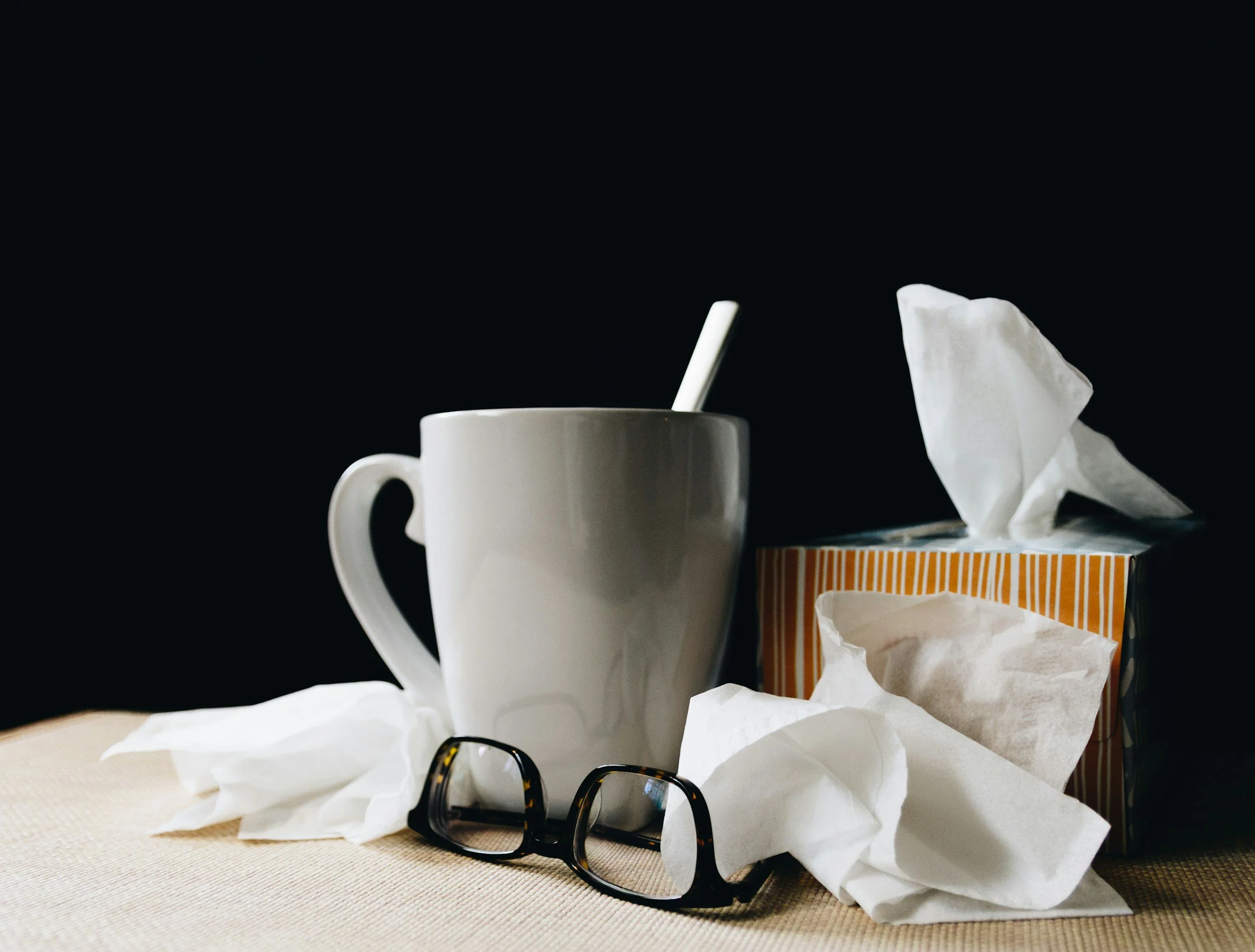
Ever get completely freaked out about illness and germs?
As the days get shorter and temperatures drop, winter often brings a familiar increase in seasonal illnesses. For many people, these changes are simply part of the season. But if you experience health anxiety, winter can feel like a particularly challenging time of year.
A sore throat might quickly turn into a fear of something more sinister and serious. A headache might lead to an afternoon of Googling/researching symptoms on Instagram. You might find yourself checking your temperature, monitoring how your body feels, or repeatedly asking friends and family whether they think you're okay.
If this sounds familiar, you're not alone. Health anxiety can make it difficult to feel safe and settled in your body, particularly during a season when illness seems to be everywhere.
The good news? You don't need to eliminate every anxious thought or achieve complete certainty about your health to feel better. Instead, you can learn to respond differently to health-related worries, build tolerance for uncertainty, and make more room for the things that matter to you.
Let's explore some ways to navigate health anxiety this winter.

How do you know if you’re experiencing health anxiety?
Health anxiety involves persistent worry or preoccupation about your physical health, often accompanied by a fear of having or developing a serious illness.
It's completely normal to care about your health and pay attention to changes in your body. Health anxiety becomes more challenging when these concerns start taking up significant mental space, interfering with everyday activities, or creating a cycle of checking, reassurance-seeking, and worry.
Some common experiences include:
Googling symptoms: Searching online for explanations of physical sensations, often becoming increasingly worried by what you find.
Body checking: Frequently monitoring your body for signs of illness, such as checking your lymph nodes, examining your skin, or noticing every small change in sensation.
Reassurance-seeking: Repeatedly asking loved ones, healthcare professionals, or online communities whether a symptom is concerning.
Avoidance: Avoiding activities, social events, exercise, or situations where you might encounter germs or notice physical sensations.
Mental reviewing: Replaying conversations, symptoms, or past experiences to determine whether you might have missed something important.
What Helps Reduce Anxiety About Your Health?
The key is to gradually shift our relationship with anxiety by learning to tolerate some level of uncertainty, rather than trying to control every thought, sensation, or feeling in an effort to feel completely certain that we're healthy and safe.
Here's the tricky part: the more we monitor our bodies, scan for potential signs of illness, and seek reassurance, the more our brains learn to treat these things as threats that need our attention. Rather than helping us feel more at ease, these attempts to gain certainty can actually reinforce anxiety and keep us stuck in the worry cycle.
1. Practice not checking every little thing
When health anxiety kicks in, it's tempting to Google a symptom, check your body for signs of illness, or ask someone to reassure you that everything is okay. While these things might make you feel better temporarily, that relief often doesn't last. Before long, you're looking for reassurance all over again.
Try gently challenging yourself to pause before acting on the urge to check. Maybe you don't immediately Google that headache or ask your partner for reassurance. Instead, see if you can let the uncertainty sit for a little while without needing to do anything about it.
You might feel uncomfortable at first, and that's okay. With practice, you'll learn that you don't have to respond to every anxious thought or urge.
2. Remind yourself that a thought isn't a fact
When you're anxious about your health, even the smallest physical sensation can feel like a warning sign. Your mind might quickly jump to the worst-case scenario, making it difficult to think about anything else.
Try creating a little distance from these thoughts. Instead of telling yourself, "Something is seriously wrong with me," try, "I'm noticing that I'm having a worry about my health right now."
It might seem like a small shift, but it helps remind you that just because something feels scary or convincing doesn't mean it's true.
3. Get comfortable with not knowing
One of the hardest parts of health anxiety is the desire to know, with absolute certainty, that everything is okay. Unfortunately, no amount of researching, symptom checking, or reassurance can provide that kind of certainty.
Rather than trying to make the uncertainty go away, practice allowing yourself to sit with that distressing feeling of something maybe being wrong. You might remind yourself, "I don't have to figure this out right now," or "I can feel anxious without needing an answer."
The goal isn't to convince yourself that nothing is wrong. It's to learn that you can handle not having all the answers right now.
4. Be mindful of what you're consuming online
When you're already feeling worried about your health, scrolling through symptom-related videos on Instagram, reading stories about people finding out their ill, or searching on Reddit/Google/Chat GPT for answers can quickly make things worse.
Consider taking a break from health-related content, unfollowing accounts that trigger worry, and resisting the urge to search every new symptom you notice.
You don't need to know every possible explanation for every physical sensation. Sometimes, stepping away from the search for answers is one of the kindest things you can do for yourself.
5. Don't put your life on hold until you feel better
It's easy to start avoiding things when you're anxious about your health. Maybe you cancel plans because you're worried about getting sick, skip the gym because you're monitoring how your body feels, or spend an evening Googling symptoms instead of doing something you enjoy.
Try to gently challenge this pattern. Make plans with friends, get outside, pursue your hobbies, and continue doing the things that make life meaningful.
You don't have to wait until you feel completely calm or certain to enjoy your life. In fact, learning to do the things you value even when anxiety is present is an important part of moving forward.

A final reminder
Managing health anxiety doesn't mean never worrying about your health. It means learning that you don't have to act on every worry, check every sensation, or find an answer to every question.
You can feel anxious and still make plans, enjoy time with friends, and move forward with your day. You don't need to feel 100% certain or completely anxiety-free to live a full life.
And remember, you don't have to figure it all out on your own. Support from a therapist can help you break the cycle of health anxiety and feel more at ease in your everyday life.
Looking for support with anxiety or health-related worries? Coastal Healing Counselling offers a supportive, non-judgmental space to explore your relationship with anxiety and develop practical tools for moving forward. If you're ready to take the next step, get in touch to learn more about therapy services and availability.